 lekha
Every potluck host knows the scene: five bowls of pasta salad, zero desserts, and one guest who "forgot" and shows up with a bag of chips. It's not bad luck. It's a potluck planning problem, and it has a simple fix.
This guide walks through planning a potluck that actually balances, from setting categories to running sign-ups so nobody double-books the same dish, plus a timeline and a checklist you can copy.
Why do potlucks go wrong?
It's rarely the guests. Group texts and "just bring something" invitations put all the coordination burden on memory. Guests reply in whatever order they see the message, nobody can see what's already claimed, and by the time you notice the imbalance it's the morning of the party. The fix isn't nagging people to communicate better. It's giving everyone visibility into what's already been claimed.
Step 1: Set your categories before you invite anyone
Decide the shape of the meal first, then invite guests to fill it in. A category list also caps how many of each dish you'll end up with: no category, no fifth pasta salad.
| Category | Typical count for 20 guests |
|---|---|
| Main dishes | 3–4 |
| Sides | 4–5 |
| Salads | 2–3 |
| Desserts | 3–4 |
| Drinks / ice | 1–2 |
| Paper goods & utensils | 1 |
Scale the numbers to your guest count, and always leave a couple of open "surprise me" slots for guests who want to bring something not on the list. If you're cooking the main yourself, cut the mains row and add a side or a dessert instead.
Need inspiration for themes and categories? Our potluck sign-up sheet ideas cover taco bars, brunch, Friendsgiving and more.
Step 2: Use a sign-up sheet guests can actually see
The core rule of a working potluck is simple: once something is claimed, everyone else sees it's taken. A shared, live sign-up sheet does this automatically. Guests pick a category, see what's already spoken for, and claim an open slot. No more "wait, is someone else bringing dessert?" texts three days before the party.
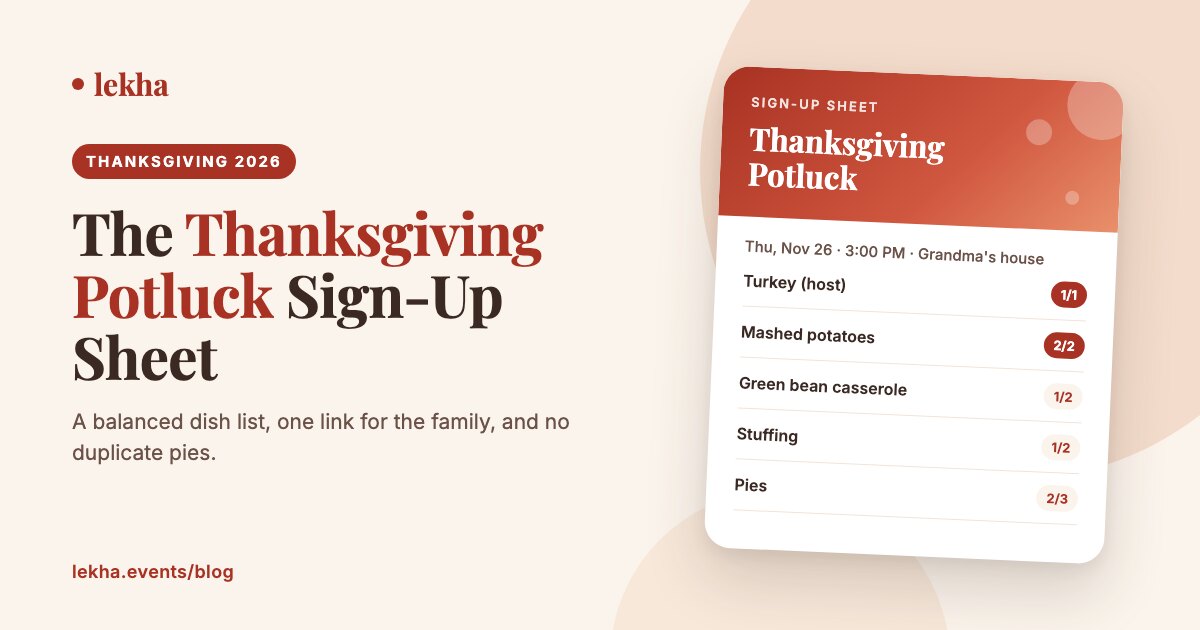
Lekha's free potluck sign-up sheet is built for exactly this: attach it to your invitation, let guests claim dishes in real time, and set a max number of slots per category so the meal stays balanced without you moderating it.
If the potluck is the only thing you need to coordinate, skip the invitation and create a stand-alone sign-up sheet with the Bring items type. Add the items you need, how many of each and a category (Mains, Drinks, Desserts), then share one link. Guests don't need an account, they can cancel or swap from their confirmation email, they get reminders before their slot, and the host can download a CSV.
When guests claim an item, they can add an optional short note, which shows next to their name on the sheet. Ask them to use it for the dish name, such as "Lemon bars, contains nuts", so a claimed "Dessert" slot tells everyone what's actually coming.
Step 3: Account for dietary needs early
Ask about allergies and dietary preferences when you send the invitation, not after the food shows up. A custom question on the RSVP ("any dietary restrictions?") lets you flag it to whoever's bringing mains, and lets guests with dietary needs bring a dish they know they can eat. Share what you learn without naming anyone: "We have two vegetarians and one nut allergy."
Step 4: Send reminders that include what they signed up for
The person who claimed "green bean casserole" in June will not remember in October. A good reminder, sent a few days before the event, should restate what each guest committed to bring, not just the date and time. This is the single biggest thing that reduces last-minute no-shows on food.
Step 5: Plan for the leftovers question
Decide ahead of time whether guests take their dish's leftovers home or leave them for the host, and mention it on the invitation. It sounds minor, but it's one of the most common points of awkwardness at the end of a potluck. Asking everyone to bring a container solves most of it.
What should the host provide?
Even at a potluck, a few things are easier if the host owns them:
- Serving basics: serving spoons, a knife for cakes, trivets for hot dishes
- Power and heat: an extension cord and a free outlet for slow cookers
- Labels: small cards and a pen so cooks can name their dish and its main ingredients
- Cold storage: cooler space or ice for salads and desserts
- A backup: a bag of rolls or a frozen lasagna in case a main falls through
Many hosts also make the main protein or a centerpiece dish, then let guests fill in sides and desserts.
How much food should each guest bring?
Ask each household to bring one dish that serves about as many people as there are guests in their group, plus a few extra. A family of four brings something that feeds six to eight. That keeps the total close to your headcount without anyone cooking for an army. For big crowds, ask mains and sides to be on the generous side, since desserts and snacks tend to be over-supplied anyway.
If someone doesn't cook, give them a job instead of a dish: ice, drinks, plates, or helping with cleanup.
A potluck planning timeline
| When | What to do |
|---|---|
| 3 weeks before | Pick a date, set categories and counts |
| 2–3 weeks before | Send the invitation with the sign-up sheet attached |
| 1 week before | Check the sheet and ask for help with empty categories |
| 2–3 days before | Send a reminder that restates each guest's dish |
| Day of | Set out labels, serving spoons and a spot for hot dishes |
| After | Thank everyone and share any leftovers plan |
A simple potluck-hosting checklist
- Set your categories and rough headcount per category
- Send invitations with a live sign-up sheet attached
- Ask about dietary restrictions on the RSVP
- Check the sign-up sheet a week out and nudge categories that are empty
- Send a reminder 2–3 days before, restating each guest's dish
- Set expectations for leftovers before the party starts
Good potluck planning works best when the coordination is invisible to guests: they see an open slot, claim it, and show up. That's the whole trick. Start with free online invitations, add the sign-up sheet, and let the categories fill themselves.
Frequently asked questions
How do you stop a potluck from having duplicate dishes?
Set categories with a limit on each, and use a sign-up sheet everyone can see. Once a slot is claimed, other guests can see it's taken and pick something else.
How many dishes do you need for a potluck of 20?
A common rule of thumb is three or four mains, four or five sides, two or three salads, three or four desserts, one or two drink contributions and one person on plates and utensils.
When should you send potluck sign-ups?
With the invitation, or at least two weeks before, so guests can plan and shop. Check the sheet a week out and ask for help with any empty categories.
Who takes home potluck leftovers?
Either works, as long as you decide beforehand and say so on the invitation. Many hosts ask guests to bring containers so leftovers can be shared.
The Lekha team builds free, privacy-first tools for invitations, RSVPs and sign-up sheets, and writes these guides from how hosts use them.